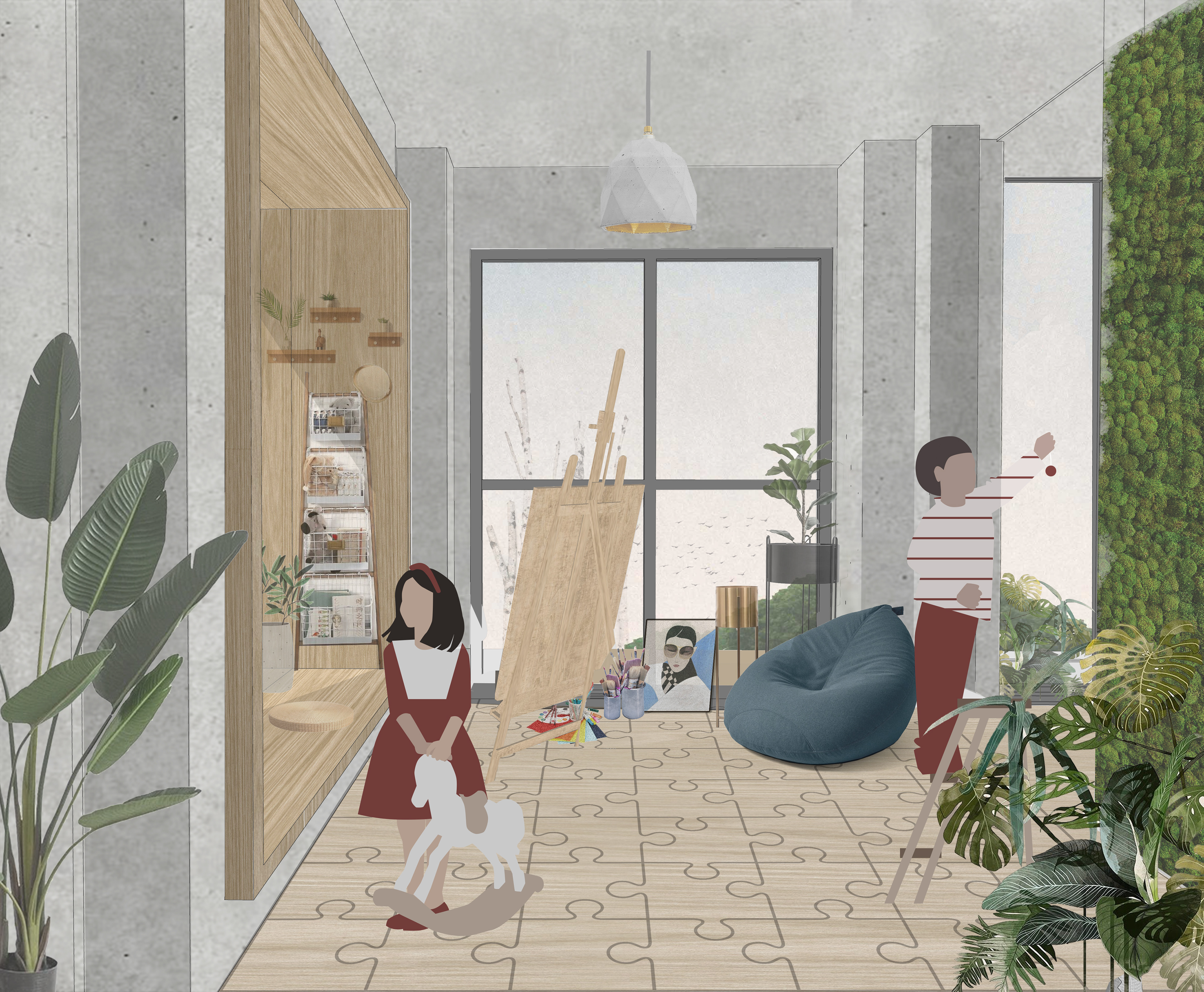
This design project focuses on creating a sensory-friendly space tailored for children with Autism Spectrum Disorder (ASD). Located in a calming and supportive environment, the design integrates principles that address the unique sensory needs of autistic individuals. By using carefully selected materials and spatial arrangements, the goal is to reduce sensory overload while promoting comfort and emotional regulation.
Key Design Elements:
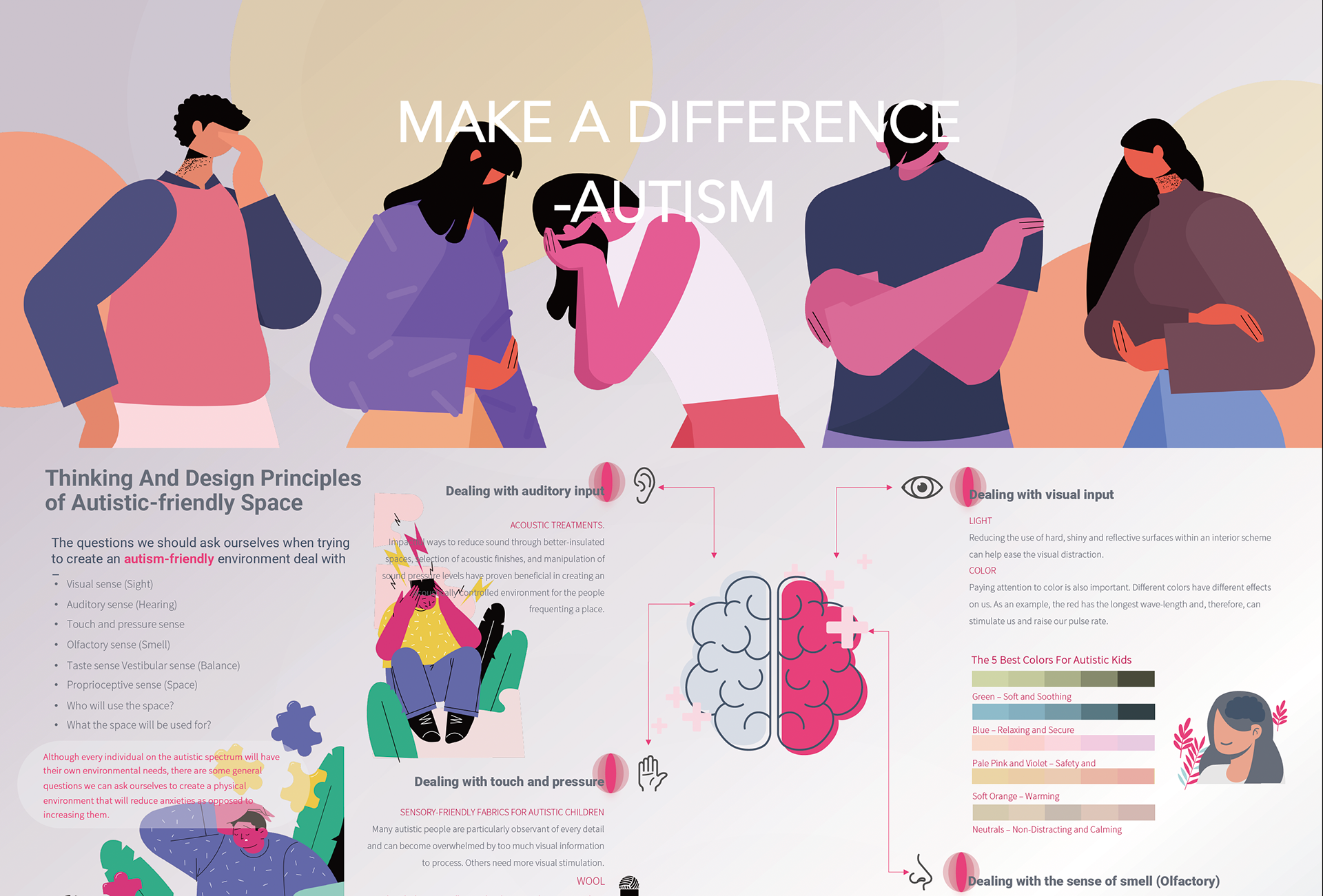
Visual Sensitivity: The space uses soft, non-reflective surfaces and calming colors like blue and pale pink to reduce anxiety and visual stress. Bright lights and harsh colors are minimized.
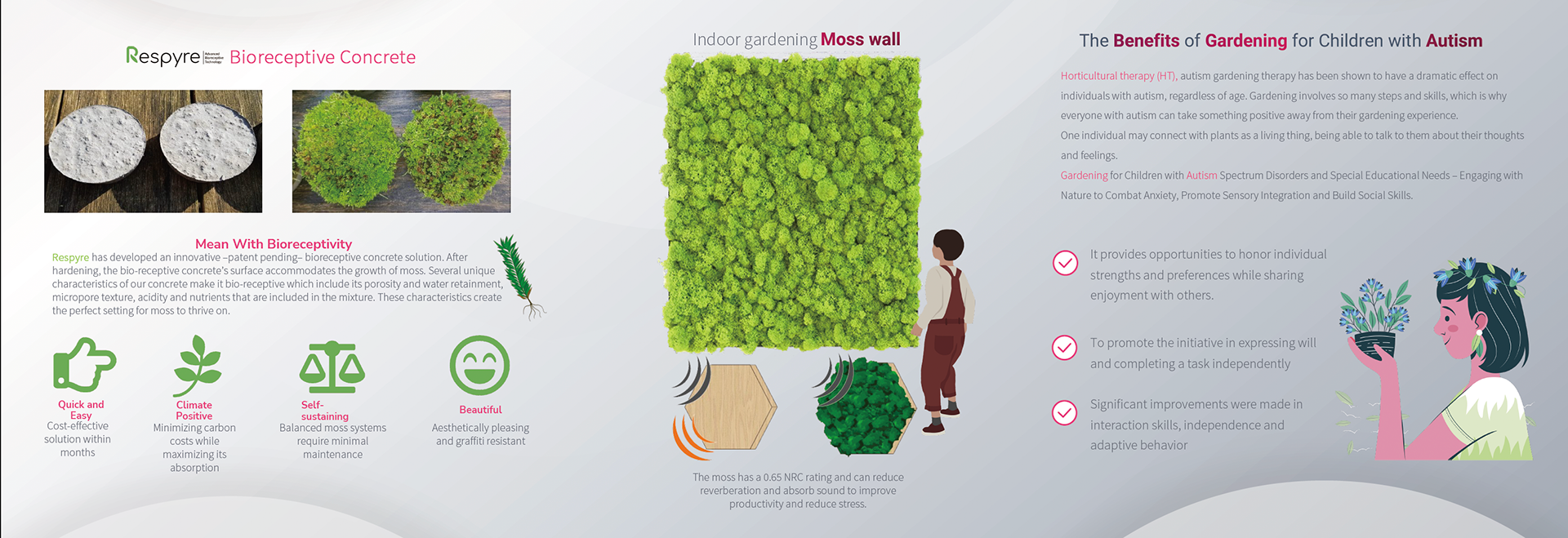
Auditory Control: Acoustic treatments and sound-absorbing materials are integrated to manage noise levels, helping to prevent sensory overload.
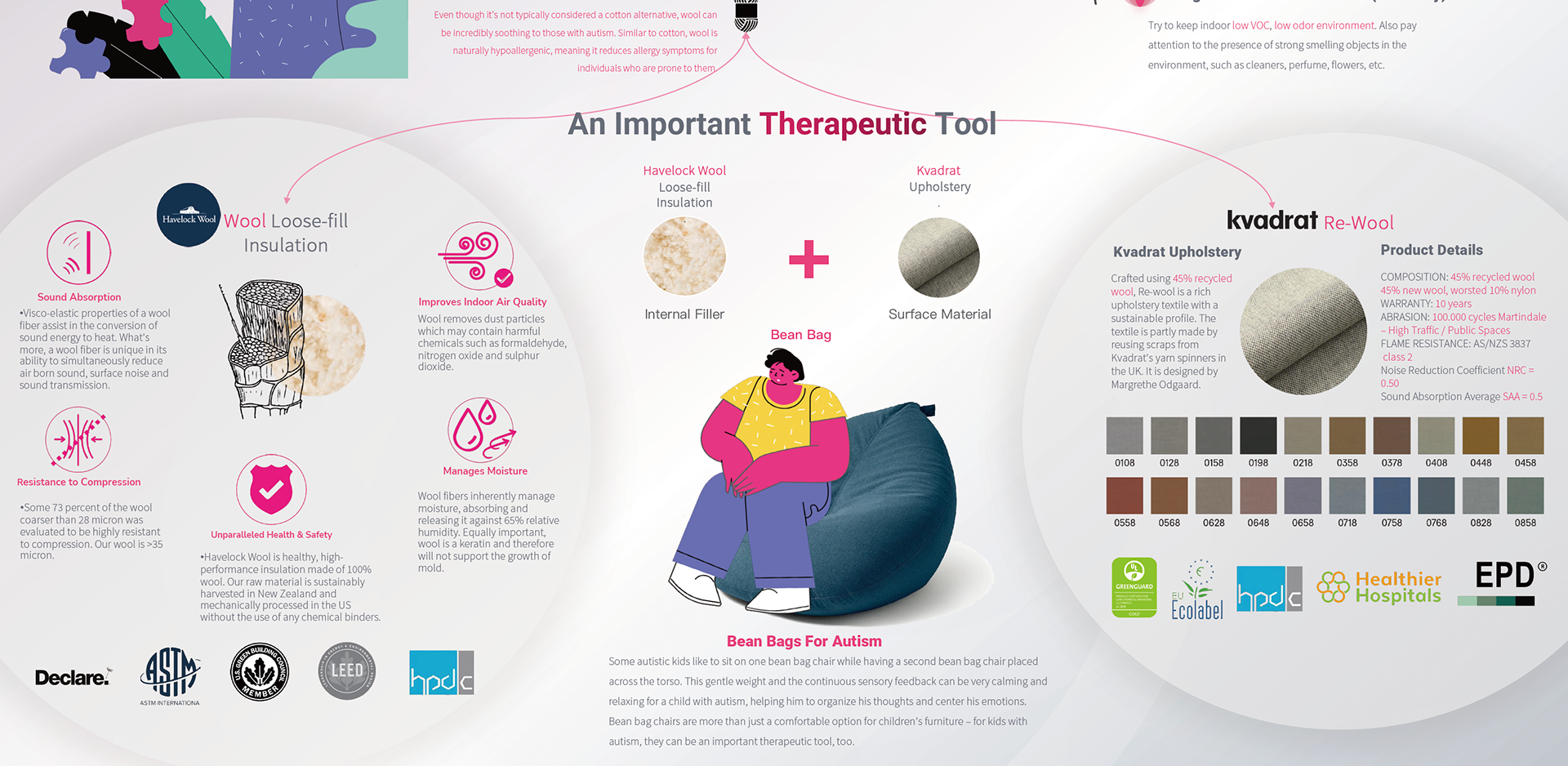
Tactile Sensitivity: The design incorporates soft, hypoallergenic fabrics such as organic cotton and wool to ensure comfort and avoid irritants.
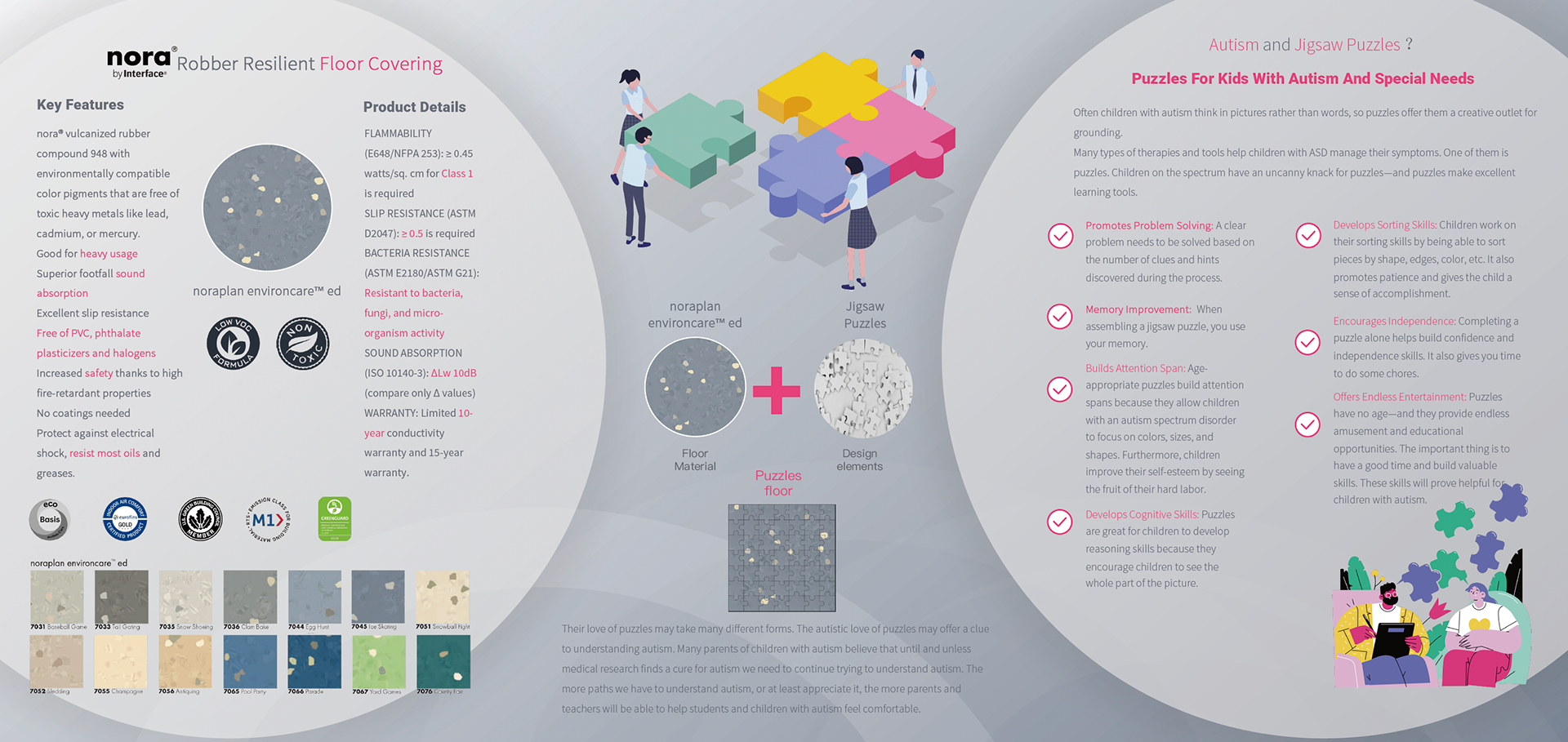
Interactive Elements: Features like bean bag chairs and sensory-friendly puzzles create interactive spaces that provide emotional and physical benefits, allowing children to self-regulate and engage at their own pace.
The project concludes with a commitment to creating an environment that balances therapeutic, sensory-friendly design with a focus on autonomy and comfort. By understanding the unique needs of individuals with ASD, the design fosters a supportive, inclusive space where children can thrive.
TYPE:
Health
Health
Project Year:
2023